Sunday, November 17, 2013
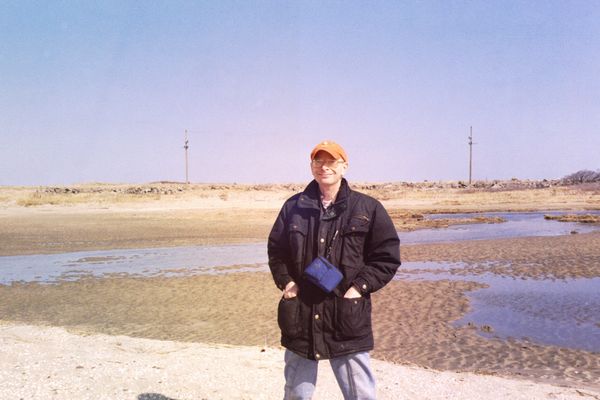
Barnegat Light NJ

Labels: Civil War Sesquicentennia, jersey shore, postcard


Wednesday, July 03, 2013
Battle of Gettysburg Day Three
Most famous for "Pickett's Charge" on the Union center. Confederate General Longstreet, in command of this operation, objected to it. Preceded by a massive Confederate 180 cannon bombardment of Union positions, probably largest of the war. The bombardment was ineffectual, although it caused havoc & carnage on the far side of Cemetery Ridge. A morning Culp's Hill attack was also turned back by the Union, as well as two cavalry attacks on the Union flanks. Union casualties for the three days were were 23,055 (3,155 killed, 14,531 wounded, 5,369 captured or missing). Confederate casualties are estimated at 23,231 (4,708 killed, 12,693 wounded, 5,830 captured or missing).
Although the war ground on for three more years, it gradually became a war of attrition by the United States, which had all the advantages in manpower & industrial might, & one of stubborn defense by the Confederate states in the hopes that the North would grow war weary, Lincoln would be defeated for reelection, & some major European power would intercede. But the combination of the Emancipation Proclamation, the Gettysburg defeat followed immediately on July 4th by the fall of Vicksburg - cutting the Confederacy in half, pretty much spelled doom for the traitorous slavers of the South. The Confederates never again had the resources to invade the North.
Although the war ground on for three more years, it gradually became a war of attrition by the United States, which had all the advantages in manpower & industrial might, & one of stubborn defense by the Confederate states in the hopes that the North would grow war weary, Lincoln would be defeated for reelection, & some major European power would intercede. But the combination of the Emancipation Proclamation, the Gettysburg defeat followed immediately on July 4th by the fall of Vicksburg - cutting the Confederacy in half, pretty much spelled doom for the traitorous slavers of the South. The Confederates never again had the resources to invade the North.
Labels: Civil War Sesquicentennia
Tuesday, July 02, 2013
Battle of Gettysburg Day Two
From wikipedia. A complex day. Union left saved by the initiatives of commanding officers with no guidance from headquarters, & by uncounted indvidual acts of valor by the soldiers.
Lee's sweeping attack on the Union left was better suited to the fast-moving skills of the late Stonewall Jackson, mortally wounded by friendly fire at Chancellorville. Longstreet, a competent & brave but cautious officer, had not favored engaging the enemy at Gettysburg. Longstreet took the wrong road to his attack point & had to backtrack. The attack itself should have been initiated farther on the Union left, which was very weak & may have opened up the command & supply area behind Cemetary Ridge, a situation Lee's missing cavalry would have uncovered. Still the attack nearly succeeded. The fighting in & around Devil's Den, a rocky outgrowth of Cemetary Ridge, was some of the most ferocious hand-to-hand combat of the entire war.
An evening attack on the Union Right at Culp's Hill also failed, as Union defenses were too strong. Periodic shooting continued there through the night into Day 3 with Confederate & Union soldiers hunkered down in close proximity. Fresh water was scarce. The battle for Culp's resumed in the morning, initiated by Union artillery in advance of Lee's own schedule. The Rebels & Federals in that sector threw everything they had at each other, but the Fed prevailed, both side suffering massive casualties. There were mistaken orders given to Federal units & the Rebel units should have withdrawn earlier as the outcome became clear.
After a lengthy delay to assemble his forces and avoid detection in his approach march, Confederate Lt. Gen. James Longstreet attacked with his First Corps against the Union left flank. His division under Maj. Gen. John Bell Hood attacked Little Round Top and Devil's Den. To Hood's left, Maj. Gen. Lafayette McLaws attacked the Wheatfield and the Peach Orchard. Although neither prevailed, the Union III Corps was effectively destroyed as a combat organization as it attempted to defend a salient over too wide a front. Gen. Meade rushed as many as 20,000 reinforcements from elsewhere in his line to resist these fierce assaults. The attacks in this sector concluded with an unsuccessful assault by the Third Corps division of Maj. Gen. Richard H. Anderson against the Union center on Cemetery Ridge. That evening, Confederate Second Corps commander Lt. Gen. Richard S. Ewell turned demonstrations against the Union right flank into full-scale assaults on Culp's Hill and East Cemetery Hill, but both were repulsed. The Union army had occupied strong defensive positions, and Meade handled his forces well, resulting in heavy losses for both sides but leaving the disposition of forces on both sides essentially unchanged. Lee's hope of crushing the Army of the Potomac on Northern territory was dashed, but undaunted, he began to plan for the third day of fighting.
***
Lee's sweeping attack on the Union left was better suited to the fast-moving skills of the late Stonewall Jackson, mortally wounded by friendly fire at Chancellorville. Longstreet, a competent & brave but cautious officer, had not favored engaging the enemy at Gettysburg. Longstreet took the wrong road to his attack point & had to backtrack. The attack itself should have been initiated farther on the Union left, which was very weak & may have opened up the command & supply area behind Cemetary Ridge, a situation Lee's missing cavalry would have uncovered. Still the attack nearly succeeded. The fighting in & around Devil's Den, a rocky outgrowth of Cemetary Ridge, was some of the most ferocious hand-to-hand combat of the entire war.
An evening attack on the Union Right at Culp's Hill also failed, as Union defenses were too strong. Periodic shooting continued there through the night into Day 3 with Confederate & Union soldiers hunkered down in close proximity. Fresh water was scarce. The battle for Culp's resumed in the morning, initiated by Union artillery in advance of Lee's own schedule. The Rebels & Federals in that sector threw everything they had at each other, but the Fed prevailed, both side suffering massive casualties. There were mistaken orders given to Federal units & the Rebel units should have withdrawn earlier as the outcome became clear.
Labels: Civil War Sesquicentennia
Monday, July 01, 2013
Battle of Gettysburg Day One
The Battle of Gettysburg was fought July 1–3, 1863, in and around the town of Gettysburg, Pennsylvania. From Wikipedia:
The first-day battle proceeded in three phases as combatants continued to arrive at the battlefield. In the morning, two brigades of Confederate Maj. Gen. Henry Heth's division (of Lt. Gen. A.P. Hill's Third Corps) were delayed by dismounted Union cavalrymen under Brig. Gen. John Buford. As infantry reinforcements arrived under Maj. Gen. John F. Reynolds of the Union I Corps, the Confederate assaults down the Chambersburg Pike were repulsed, although Gen. Reynolds was killed. By early afternoon, the Union XI Corps had arrived, and the Union position was in a semicircle from west to north of the town. The Confederate Second Corps under Lt. Gen. Richard S. Ewell began a massive assault from the north, with Maj. Gen. Robert E. Rodes's division attacking from Oak Hill and Maj. Gen. Jubal A. Early's division attacking across the open fields north of town. The Union lines generally held under extremely heavy pressure, although the salient at Barlow's Knoll was overrun.
The third phase of the battle came as Rodes renewed his assault from the north and Heth returned with his entire division from the west, accompanied by the division of Maj. Gen. W. Dorsey Pender. Heavy fighting in Herbst's Woods (near the Lutheran Theological Seminary) and on Oak Ridge finally caused the Union line to collapse. Some of the Federals conducted a fighting withdrawal through the town, suffering heavy casualties and losing many prisoners; others simply retreated. They took up good defensive positions on Cemetery Hill and waited for additional attacks. Despite discretionary orders from Robert E. Lee to take the heights "if practicable," Richard Ewell chose not to attack. Historians have debated ever since how the battle might have ended differently if he had found it practicable to do so.With the Union Army, under new commander George Meade, strung out on roads south of Gettysburg, Lee had some tremendous potential tactical advantages. But Lee did not have Jeb Stuart's superb calvalry, his eyes & ears, which he had permitted to ride off independently, circling around the Union Army, in a movement more grandstanding than anything else. Many historians believe this resulted in Lee choosing the wrong place & conditions to do battle. I agree. In Lee's defense, he believed under the circumstances he had to engage the enemy where & when he found them. He was in hostile territory, not in Virginia close to his supplies. He could not take a up a defensive position & wait indefinitely for the Union forces to engage him.
Labels: Civil War Sesquicentennia